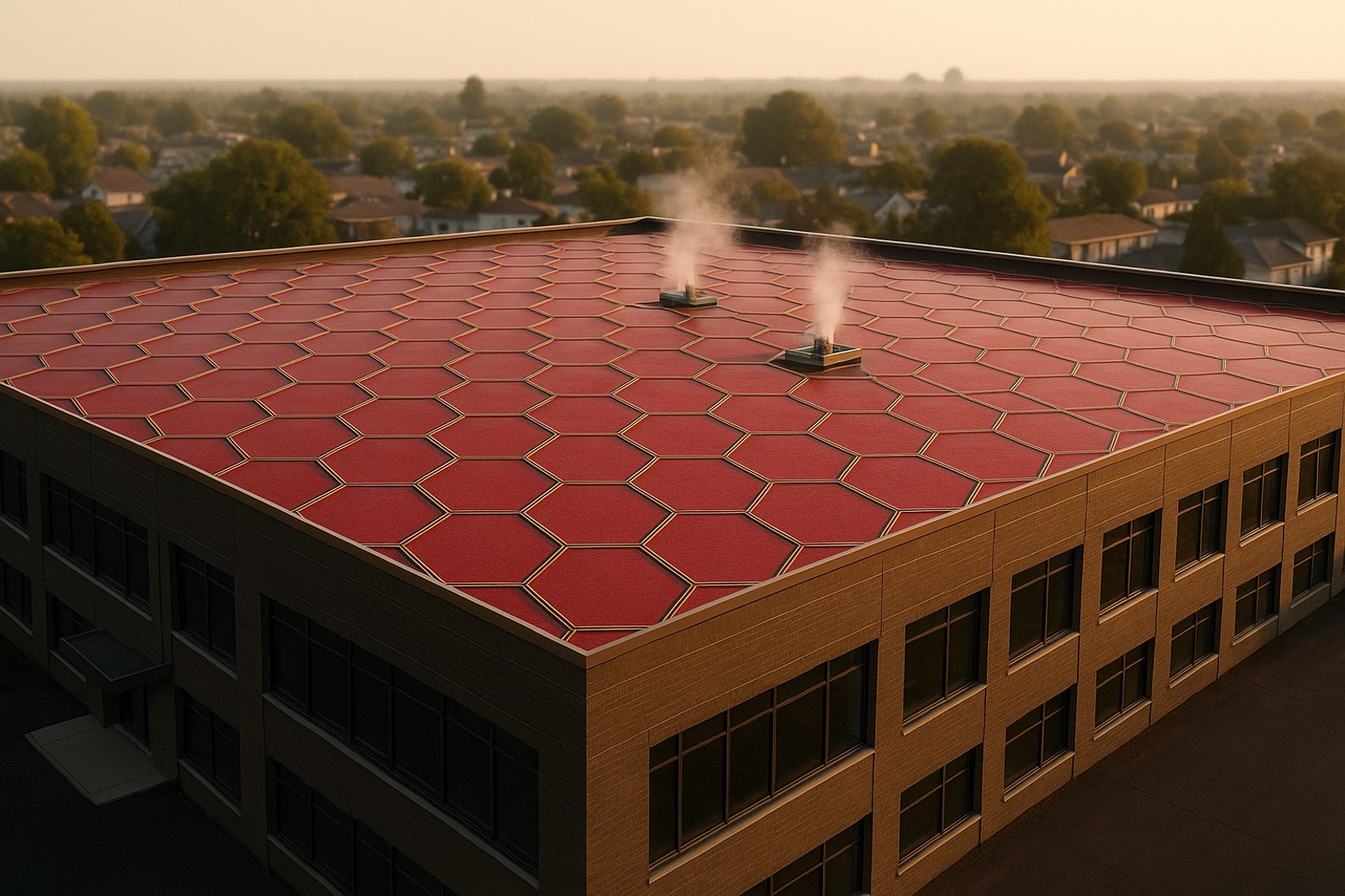
For twenty-five years the industry has told the same story about compute: it belongs in a hyperscale campus, sitting on cheap land, next to cheap power, connected to the world by cheap fiber. That story is falling apart in three places at once.
1. Data locality is becoming law
Every quarter another jurisdiction publishes another rule that says this class of data cannot leave this geography. Healthcare in the United States. Financial records in the EU. Government-adjacent workloads in dozens of countries. Even inside the U.S., state-level data-residency laws are proliferating faster than anyone can build regional facilities to serve them.
Hyperscale, by definition, cannot be everywhere. A rooftop can be everywhere the buildings are.
2. AI inference is a power problem, not a fiber problem
An AI inference request is a small packet in, a small packet out, with a huge amount of energy consumed in between. What matters is not proximity to fiber. It's proximity to power, and specifically to power that isn't already spoken for. The available power on a commercial rooftop, once you connect it to on-site solar plus a DC backplane, is more than sufficient to serve inference for the building beneath and the block around it.
"The next data center you build should be the roof of the building you're already in."
3. The economics of long-haul fiber are quietly collapsing
Wholesale IP transit prices have fallen by an order of magnitude in a decade, but the operating cost of hyperscale transport (cooling, redundancy, physical security, land taxes) has not. The delta between "hosting compute in a purpose-built rural facility connected by long fiber" and "hosting compute where the workload lives" is narrower than most people building the former have admitted.
What changes when the rooftop is the site
Three things:
- The building owner is now the landlord for compute. Roof leases, historically the province of cell-tower operators and HVAC contractors, become high-value real-estate contracts with recurring energy tenancy.
- The building becomes a resilience asset. During grid instability, the compute cluster on the roof is the last thing to lose power, because it's connected to the panels and the DC backplane that power it directly.
- The blast radius of any single failure shrinks. If one rooftop cluster goes down, it takes one building's worth of compute with it, not one region's.
ROSE was designed for exactly this shift. Our interlocking compute panels turn a flat roof into a modular, walkable, liquid-cooled compute field with a native DC microgrid backplane and a mechanical form factor that installers already know how to handle. Patent pending, Application #64/124,031, priority date August 1, 2026.
Early access is limited.
ROSE is opening a small cohort for building owners with meaningful flat-roof footprint, energy tenants ready to commit to on-site load, and aligned early-stage investors. If you're one of these, we want to talk.
For information on becoming an early investor or tenant commitment, reach out to us at hello@rosepanel.io.
hello@rosepanel.io